

Building a website often starts with one simple question: how much does web hosting actually cost in Singapore? The answer isn’t always straightforward because, in 2026, prices can vary depending on performance, resources, and what your website really needs.
In this guide, we’ll break down web hosting costs based on different hosting types, explore the key factors that affect pricing, and help you understand what to look for when choosing the right hosting plan in Singapore.
Web Hosting Costs by Type in Singapore
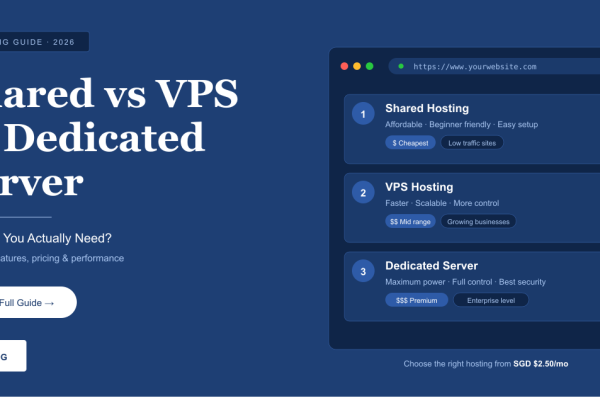
1. Shared Hosting
If you’re just starting out, shared hosting is usually the first option you’ll come across. Think of it like renting a room in a shared house, you are sharing the same server with other websites, which is why the cost stays low.
Because of this setup, shared hosting works best for smaller websites that don’t get a lot of traffic yet. It’s also popular among beginners in Singapore since it’s simple to use and doesn’t require technical knowledge.
- Price: SGD $3-$10/month
- Best for: beginners, personal blogs, small websites
- Features: shared resources, basic storage, free SSL (sometimes)
- Pros: It’s one of the most affordable options available and is very easy to set up, even for beginners.
- Cons: Since resources are shared, performance can slow down when there’s a spike in traffic.
2. VPS Hosting
As your website starts to grow, shared hosting can begin to feel a bit limited. That’s when many people start considering VPS hosting, which gives you a dedicated portion of a server instead of sharing everything with others.
It’s like upgrading from a shared space to your own private room. You are still on the same server, but with your own allocated resources. This setup gives you better performance, more control, and greater stability compared to shared hosting.
- Price: SGD $10-$50/month
- Best for: growing websites, small businesses
- Features: dedicated resources, root access, better performance
- Pros: You get more control and stable performance compared to shared hosting, making it easier to scale as your website grows.
- Cons: It usually requires some basic technical knowledge to manage, especially if it’s not fully managed.
3. Cloud Hosting
If your website traffic doesn’t stay the same every day, cloud hosting can feel like a more flexible option. Instead of relying on a single server, your website runs on a network of servers that work together to handle your traffic.
You can think of it like having backup support, so if one server is busy or goes down, another one steps in. This setup helps keep your website stable and responsive, especially when traffic suddenly increases.
- Price: Typically starts around SGD $5-$10/month for basic usage, and can go up to SGD $50-$100+ depending on resources like CPU, RAM, and bandwidth
- Best for: scalable websites, startups, eCommerce
- Features: flexible resources, pay as you go pricing, high uptime
- Pros: It can easily scale based on your needs, so your website stays stable even during traffic spikes.
- Cons: Pricing can be harder to predict, especially if your usage changes frequently.
4. Dedicated Server
For websites that need maximum performance and full control, dedicated servers are often the next step. Instead of sharing resources, your website runs on an entire server that is exclusively yours.
Imagine having an entire house to yourself, where everything is fully under your control and no resources are shared with anyone else. That’s how dedicated hosting works, everything is focused on your website, which means more consistent performance, stronger security, and complete flexibility to customize your setup.
- Price: Typically starts around SGD $80-$100/month and can go up to SGD $300+ depending on server specifications and management level
- Best for: large businesses, high-traffic websites
- Features: full server control, high performance, dedicated resources
- Pros: You get full control and the highest level of performance, making it suitable for handling large volumes of traffic.
- Cons: It is significantly more expensive and usually requires advanced technical knowledge to manage.
What Affects Web Hosting Costs in Singapore?
Web hosting prices in Singapore don’t just depend on the type of hosting you choose. Once you look a little closer, it becomes clearer why some plans cost more than others. So what actually affects the price? Here are a few key factors to look at:
a). Data Center Location
Where your server is located can also affect both cost and performance. Hosting your website closer to your audience usually means faster loading speeds and a better overall experience.
For example, choosing a Singapore based provider like HostSG can help improve loading times and support quality if most of your visitors are based in Singapore.
b).Server Performance (CPU & RAM)
The more power your website needs, the higher the cost tends to be. CPU and RAM are what keep your website running smoothly, especially when handling multiple visitors at once.
You can think of it like the engine of a car, the more powerful it is, the better it performs, but it also comes at a higher cost.
c).Storage & Bandwidth
Websites with more content or higher traffic naturally require more storage and bandwidth. This means more resources are needed to keep everything running without slowdowns.
It’s similar to having more people using the same space, the more activity there is, the more capacity you’ll need to keep things running smoothly.
d).Managed vs Unmanaged Hosting
Some hosting plans come with technical support and maintenance included, while others leave everything in your hands. Managed hosting usually costs more, but it saves you time and effort, especially if you’re not very technical.
In a way, it’s like having someone take care of the setup and maintenance for you, so you can focus on running your website instead.
All of these factors work together, which is why hosting prices can vary more than they first appear. After looking at what goes on behind the pricing, it becomes easier to see that web hosting isn’t just about picking a plan, it’s about understanding what your website actually needs as it grows.
Rather than focusing only on the price, it often comes down to choosing something that feels right for your setup and future plans, including whether you prefer a larger provider or something more local, like HostSG.